


Wine Club
On the blog of Cava Kalomenidis’ Wine Club, you can find publications, articles, stories, events, and all the latest news around the colorful world of drink and wine.


If you’re looking for the best white wines but don’t know where to start, you’re in the right place. Greek viticulture has surprises for every taste: from aromatic dry wines with pronounced acidity to velvety semi-sweet ones that pair perfectly with an afternoon meal. In this article you’ll get to know the most noteworthy Greek options, both dry and semi-sweet, and understand why they deserve a spot on your list.
How to Choose the Best White Wine
The choice of the best white wine depends mainly on three things: your own taste, the food it will accompany, and the occasion. A refreshing dry white that pairs ideally with seafood isn’t necessarily the right choice for someone who prefers more aromatic, softer wines.
Before choosing a label, it’s worth understanding the main categories and what each one offers.
Dry wines: They have minimal residual sugar, pronounced acidity, and a cleaner, “crisp” character. They pair excellently with seafood, fish, vegetables, and white meats.
Semi-sweet wines: They retain more sweetness without becoming heavy. They’re ideal for more relaxed occasions, summer tables, light desserts, or for those who prefer softer flavors.
The top Greek choices in dry white wines
Greek dry white wines stand out for their pronounced acidity, aromatic character, and unique connection to the terroir of each region. From the minerality of Santorini to the aromatic notes of the Peloponnese and the richness of Crete, the varieties below are considered among the most noteworthy choices in Greek winemaking.
Assyrtiko of Santorini: The Landmark
Assyrtiko is undisputedly at the top of the list for most sommeliers. Grown in volcanic soil, it has explosive acidity and a mineral character, and it holds up for years in the bottle. Producers such as Sigalas, Argyros, and Gaia have repeatedly won international awards.
Ideal for: Raw seafood, hard cheeses, oven-baked fish
Moschofilero: The Aromatic Surprise of the Peloponnese
One of the most distinctive Greek whites, with rose and citrus aromas. It’s produced mainly in Plati, Mantineia. Light and fresh, with low alcohol, it’s ideal for a summer table. Ktima Tselepos is one of the most reliable producers, with consistently award-winning labels.
Ideal for: Salads, light appetizers, seafood pasta
Roditis: The Everyday Favorite
It’s grown across much of Greece, mainly in Achaia. It produces fresh, delicate whites with aromas of green apple and lemon. Excellent value for money, and this is where you’ll find plenty of good white wines at attractive prices.
Vidiano & Vilana: The Cretan Choices
From Crete, two varieties worth your attention: Vidiano gives rich, full-bodied whites with ripe fruit character, while Vilana is more elegant and fresh. Both are represented by award-winning Greek wines with international recognition.
The Most Aromatic and Balanced Semi-Sweet White Wines
The best aromatic and balanced semi-sweet white wines are far more varied than most people think. We’re not talking about cheap, heavy options. There are semi-sweet wines with remarkable balance that elevate a table.
Muscat of Patras: The Classic
Aromatic and fruity, with a balance between sweetness and acidity. It’s produced in Achaia from the Muscat of Rio variety. Achaia Clauss and Parparoussis are producers with a long history in this category.
Muscat of Samos: Recognized Worldwide
One of the most famous Greek wines internationally. Muscat of Samos is produced by the local cooperative EOSS and has won awards at the most important international competitions. Floral, with aromas of honey and apricot, it’s an unbeatable match for dairy-based desserts.
Gaia Notios White: Modern, Affordable, Enjoyable
A blend of Moschofilero and Assyrtiko, this wine represents what modern Greek winemaking does well: accessible, pleasant wines with a Greek character. Ideal for those looking for the best options without wanting to spend a lot.
Where to find the best ones
Choosing the right place to buy is just as important as choosing the label. At Cava Kalomenidis, the team brings together years of experience in Greek and imported wines. If you’re torn between two labels, you can ask them directly and get an honest, well-informed opinion from people who know the story behind each label.
Online wine shops offer easy access to award-winning Greek white wines, with the ability to compare and choose by variety, region, or type (dry/semi-sweet). Ideal for those who want to discover new labels with proper guidance.

You don’t need to be a professional bartender or have expensive equipment to make a good cocktail at home. With a few basic ingredients, a shaker (or even a jar with a lid), and five minutes of free time, you can easily prepare cocktails that will impress your guests or simply make your evening on the couch more enjoyable.
In this article you’ll find tried-and-tested cocktail recipes using the most popular spirits (vodka, rum, tequila, and gin), along with practical tips on how to make cocktails even if it’s your first time.
What you need to make cocktails at home
Before we get to the recipes, let’s look at what you actually need. The good news is that for most easy cocktails, no specialized equipment is required:
A shaker(optional: you can also stir with a spoon or shake in a sealed jar), a measuring cup or a simple shot glass for portions, plenty of ice, fresh fruit such as lime, lemon, and orange, and the basic spirits: vodka, rum, tequila, and gin.
With these few ingredients, you cover most of the popular cocktail recipes.
Easy cocktails with vodka
Vodka is one of the most versatile spirits, since it has a neutral flavor and goes with almost anything. If you’re looking for easy vodka cocktails, start with these two classics.
- Vodka Tonic with lime: In a glass filled with ice, pour 50ml vodka, top with tonic water, and add a slice of lime. Stir lightly. Ready in under a minute.
- Cosmopolitan: Shake 40ml vodka, 15ml triple sec, 30ml cranberry juice, and 15ml lime juice in a shaker with ice. Strain into a chilled cocktail glass. A classic, elegant cocktail that looks much harder to make than it actually is.
Easy cocktails with rum
Rum evokes summer and is the base for some of the world’s most beloved cocktail recipes.
- Cuba Libre: In a glass filled with ice, pour 50ml white rum, fill with cola, and add a slice of lime. Perhaps the simplest cocktail there is, but it always works.
- Mojito: Lightly muddle 8-10 mint leaves with a spoonful of sugar and the juice of half a lime in the glass. Add ice and 50ml white rum, then top with soda. Stir well. Among easy rum cocktails, the mojito is certainly the most popular, and deservedly so.
Easy cocktails with tequila
Tequilaisn’t just for shots. With the right proportions, easy tequila cocktails are just as enjoyable as any other cocktail.
- Tequila Sunrise: In a tall glass filled with ice, pour 50ml tequila and top with orange juice. Slowly add a spoonful of grenadine syrup on top without stirring, so that the signature sunset effect in layered colors is created.
- Paloma: Stir 50ml tequila and the juice of half a lime, then top with grapefruit soda (or plain soda with a little sugar if you can’t find grapefruit soda). Serve with ice, salt, and a slice of grapefruit. You’d be hard-pressed to find a more refreshing cocktail.
Simple cocktails with gin
Gin, with its characteristic flavor from aromatic botanicals, is ideal for those who want something a bit more complex in taste but just as simple to make.
- Gin Tonic: The most classic of all. In a glass with plenty of ice, pour 50ml gin, top with tonic water, and add a slice of lemon or cucumber. Stir gently.
- Tom Collins: Shake 50ml gin, 25ml lemon juice, and a spoonful of sugar or simple syrup in a shaker. Strain into a tall glass filled with ice and top with soda. One of the most refreshing simple gin cocktails for summer.
How to make a cocktail: 5 basic steps
If you’re wondering how to make cocktails like a pro without any experience, keep these five steps in mind:
First, prepare all the ingredients and tools before you start, so you don’t have to scramble in the middle of the process. Second, always measure your portions with a jigger or shot glass; the proportions are what make the difference between a successful cocktail and one that comes out unbalanced. Third, use plenty of ice, because it keeps the drink cold without diluting it too quickly. Fourth, shake or stir depending on the recipe: cocktails with carbonated ingredients (like tonic or soda) are stirred gently, while the rest are shaken vigorously in a shaker. Fifth, serve immediately and add the garnish (a fruit slice, mint leaves) at the end, for freshness and an attractive look.
Tips for home cocktails that stand out
A few small details make a big difference when you make cocktails at home. Always use fresh lime or lemon juice instead of bottled, because the flavor changes dramatically. Chill your glasses in the freezer for a few minutes before serving, so the drink stays cold longer. Don’t skip the garnish: a slice of fruit or a sprig of mint visually upgrades any drink. And finally, always test the proportions in a small quantity first before making a big batch for guests.
Easy cocktails don’t require experience, expensive ingredients, or complicated equipment. With a few basic cocktail recipes, whether with vodka, rum, tequila, or gin, you can make cocktails at home that will delight both you and your guests. Start with the simplest ones, like the Gin Tonic or the Cuba Libre, and gradually try more complex recipes such as the Mojito or the Tequila Sunrise. Browse our shop’s full cocktail collection for ready-made mixers and ideas, or all our drinks to find the right spirit. All you need is a little willingness to experiment.
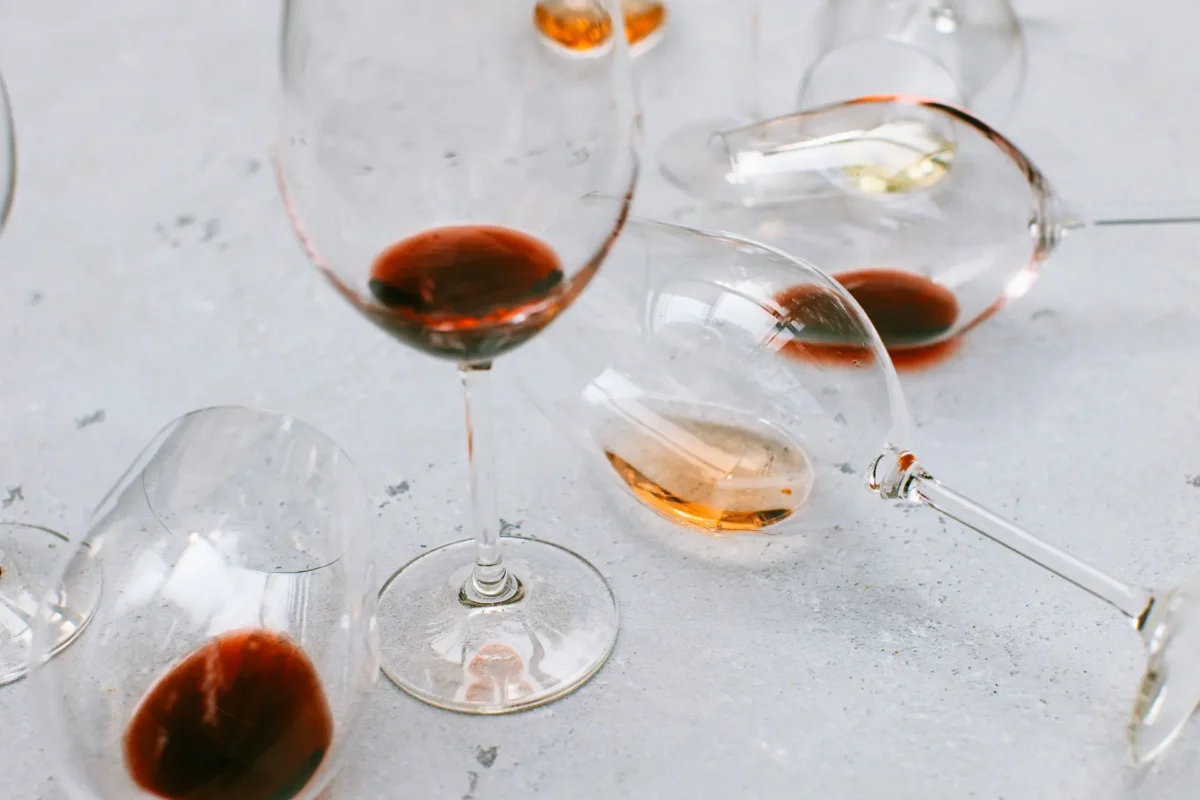
You opened a bottle a few days ago, picked it up again today, and something’s off. Does it smell sharper and more vinegary than you remember?
If you’re wondering what to do with soured wine, we have good news: it’s not unusual, and it doesn’t necessarily mean you stored it wrongly. It’s a natural chemical reaction that sooner or later happens to every opened bottle. In this complete guide, you’ll find out why wine turns sour, how to spot it early using your senses, and clever, creative ways to put it to use in your everyday life instead of pouring it down the sink.
Why Does Wine Turn Sour After Opening?
In most cases, soured wine is the unavoidable result of the natural process of oxidation. As long as the bottle stays sealed, the liquid is protected from air. But as soon as the cork is removed, the open wine comes into direct and constant contact with oxygen.
That oxygen acts as a catalyst, activating acetic acid bacteria (such as Acetobacter and Gluconobacter) that are naturally present in the environment. These bacteria feed on the wine’s alcohol (ethanol) and gradually convert it into acetic acid, the very same compound that gives vinegar its sharp taste and pungent smell.
Factors that speed up oxidation:
- High temperature: Wine spoilage progresses about twice as fast at room temperature or in a warm environment, since heat encourages bacteria to multiply.
- Exposure to air: The less wine remains in the bottle, the more air fills the empty space, dramatically speeding up oxidation.
- Poor or loose closure: A cork simply pushed back in without a proper seal lets oxygen flow in and out freely.
- Low sulfite content: Wines without sulfites (natural or organic) or those with low levels of preservatives lack their natural “shield” and tend to oxidize much faster.
Note: An oxidized wine isn’t toxic or harmful to your health. It has simply lost its freshness, its fruity aromas, and its balanced flavor profile.
How to Tell Whether Your Wine Has Gone Sour (Signs)
You don’t need to be a sommelier to tell whether your wine has been affected by oxidation. The symptoms are clear and easy to detect using your senses:
- Aroma (Smell): Fresh fruit, floral, or spice aromas disappear. In their place comes a sharp smell reminiscent of vinegar, acetone (nail polish remover), or overripe, rotten apples.
- Taste (Palate): On the palate, the wine loses its structure and sweetness. A sharp, stinging, aggressive acidity takes over, leaving a dry, unpleasant aftertaste.
- Appearance (Sight): Exposure to oxygen changes the color of the liquid. White wines lose their bright, pale-golden shade and take on a dark, dull yellow or amber color. Rosé wines develop orange highlights, while red wines lose their vivid purple color and shift toward brown (brick-orange).
What Should I Do with Sour Wine? – 4 Clever Uses
Wine oxidation is an irreversible chemical process, so there’s no way to “rescue” the bottle and make it pleasant to drink from the glass again. However, since it isn’t harmful to the body, you can put it to clever use around the house:
- Taking your cooking up a notch: The extra acidity in the wine is a plus in the kitchen. Use it to deglaze sautéed meats (e.g., beef or pork cooked in wine), enrich a red tomato sauce, or add depth to a soup. The alcohol evaporates during cooking, leaving only the concentrated flavor behind.
- Making homemade vinegar: If you leave the soured wine in a glass jar covered with a piece of cheesecloth (so it can breathe without letting insects in) in a shady spot, within a few weeks you’ll have your own handmade, aromatic, high-quality vinegar for your salads.
- Marinating tough meats: The acids in wine break down the meat’s tough protein fibers. Mix the sour wine with herbs, olive oil, and garlic to make an excellent marinade that will leave the meat incredibly tender before cooking.
- Mild natural cleaner: The acidity of wine has mild antibacterial properties. Diluted with a little water, it can be used to clean glass surfaces, kitchen counters, or stainless steel cookware, removing limescale and stains.
Warning: If the wine doesn’t just smell vinegary but gives off a strong moldy smell, the problem isn’t oxidation but the cork (cork taint). In that case, the wine should be thrown out, since it will pass that unpleasant taste on to food as well.
How to Avoid Souring: Wine Storage Tips
Proper wine storage is the secret to slowing down oxidation and enjoying your bottle for several days after opening.
- Seal it right away: Don’t leave the bottle open on the table throughout the meal. Put the stopper back in as soon as you’ve poured each glass.
- Using special preservation accessories: Invest in a wine stopper. Vacuum stoppers remove the trapped air from the bottle, while carbon dioxide or argon systems create a protective layer over the liquid.
- Storing it in the fridge (for all wines): Put the opened bottle in the fridge right away. The low temperature drastically slows the chemical activity of acetic acid bacteria. This applies to red wine too: just take it out of the fridge 20-30 minutes before serving so it returns to the right temperature.
- Upright storage: Always store opened bottles standing upright. This minimizes the surface area of the wine that comes into contact with oxygen.
- Drink it in good time: Consume opened wine within 3-5 days. Sparkling wines and light whites are more delicate (1-3 days), while full-bodied reds and fortified wines last longer.
Where to Find Wines That Stand the Test of Time
The quality of the bottle, the wine’s structure, and a carefully managed production process all play a decisive role in how well a wine holds up after opening.
At Cava Kalomenidis, we select labels from top Greek and international vineyards with particular care. We offer wines with excellent flavor balance that keep their concentrated aromas even days after opening.
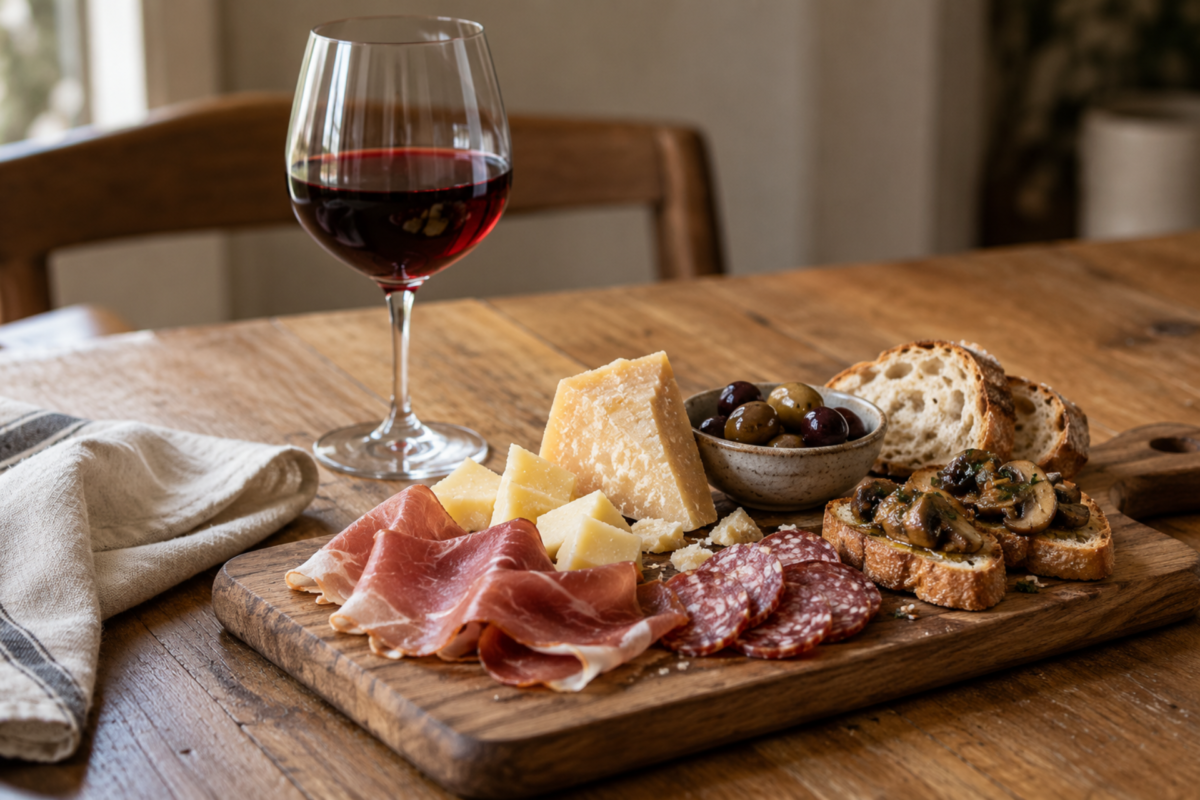
Red wine can accompany anything from a simple cheese platter to a hearty Sunday meal. The secret lies in balance: the fuller, more tannic, and more intense the wine, the richer the food it can be paired with.
If you’re wondering, “What does red wine pair with?”, the answer depends on its grape variety, body, tannins, and sweetness.
Red wine: what does it pair with?
Red wines traditionally go well with red meat, cured meats, aged cheeses, pasta with rich sauces, and mushroom dishes. That said, not every red wine suits the same food.
A light, fruity red like Pinot Noir can go with chicken, pork, mushrooms, or even fatty fish such as salmon. A medium-bodied red, such as Merlot or Agiorgitiko, suits pizza, burgers, pasta with red sauce, and grilled meats.
Fuller-bodied wines, such as Cabernet Sauvignon, Syrah, or a robust Xinomavro, shine alongside beef, lamb, game, braised meats, and aged cheeses. The bold flavors of the food balance the wine’s tannins and full body.
Red wine: what should I serve it with at a meal?
For an everyday meal, you can pair a soft red wine with spaghetti Bolognese, pizza, meatballs, or oven-roasted pork. If you’re hosting a more special dinner, choose a full-bodied dry red to go with beef steak, lamb, or slow-cooked meat.
With dishes that feature mushrooms, truffle, or earthy flavors, opt for a red wine with an elegant aromatic character. If the food has a sweet sauce or dried fruit, a fruitier wine can create a better balance.
For classic food pairings, there are plenty of options among dry wines. For greater complexity and depth, aged wines are also particularly interesting.
Easy accompaniments for wine
You don’t need to prepare a full meal to enjoy a good bottle. A few easy wine accompaniments can come together into a lovely platter in just a few minutes.
Choose two or three cheeses of varying intensity, such as graviera, Parmesan, smoked cheese, or a creamy blue cheese. Add prosciutto, air-dried salami, or smoked cold cuts, along with olives, nuts, breadsticks, and dried fruit.
Mushroom bruschetta, small pies, meatballs, and grilled vegetables are also practical choices. For a more casual evening, even a good pizza or a burger can pair wonderfully with a fruity red wine.
Red wine and cheese accompaniments
Mild red wines pair best with cheeses of moderate intensity, so that neither overpowers the flavor of the other. A light red can be served with Gouda, Brie, or a soft graviera.
A full-bodied, tannic wine calls for more intense cheeses, such as aged graviera, Parmesan, or cheddar. Semi-sweet red wines can be paired with blue cheeses, as their sweetness balances the cheeses’ salty, bold flavor.
Does red wine go with dessert?
Red wine can accompany dessert, as long as the right style is chosen. A dry red usually doesn’t suit very sweet desserts, because it can come across as more bitter or sour.
For chocolate, brownies, red-fruit tarts, or cherry desserts, choose a red wine with a pronounced fruity character and enough sweetness. A useful rule is that the wine should be at least as sweet as the dessert. Relevant options can be found in the category of semi-sweet wines.
The best pairings for red wine
Successful red wine pairings depend mainly on intensity. Light wines need subtler accompaniments, while full-bodied wines can stand up to rich, grilled, or slow-cooked dishes.
The sauce matters too. Chicken in a creamy white sauce may suit a white wine better, while the same meat with mushrooms or a red sauce can pair nicely with a light red.
Very spicy dishes, strongly vinegary salads, and especially sweet desserts usually make dry red wines struggle. In these cases, it’s better to choose a fruitier or slightly sweet wine.
How is red wine served properly?
Red wine doesn’t need to be served warm. Light reds are more enjoyable at around 12–14°C, while medium- or full-bodied wines are usually served at 16–18°C.
Use a glass with a fairly wide bowl so the wine comes into contact with the air and releases its aromas. A young, tannic wine can benefit from being opened a little ahead of time or transferred to a decanter before serving.
Ultimately, the right accompaniment is one that neither overpowers the wine nor gets lost beside it. Start with the intensity of the bottle, choose food with a matching character, and create the pairing that best suits your own occasion.
Find the red wine that suits your table
Discover the collection of red wines from Kava Kalomenidis and choose the bottle that suits your food, your mood, and your occasion. If you need help, the Kava team can recommend the right wine for the menu you’re preparing.

A presentation at Cava Kalomenidis with Amoenos Vineyards and the Amyndeon “Bostani” wines took place on Friday, July 18th, in Ptolemaida.
Wine lovers from Western Macedonia had their first introduction to the wines of the second generation of the Alpha Estate.
Winemakers Emorfili and Konstantina Mavridou with Konstantinos Kontosoros presented the following wines at the tasting: Bostani White (Assyrtiko-Sauvignon Blanc), Bostani Rosé (Xinomavro-Syrah), Bostani Red (Xinomavro-Merlot).
The evening was accompanied by music selections from the wine cellar.

The 14th Balkan International Wine Competition took place in Naoussa from May 28th to 30th. International oenologists and Masters of Wine, including the first Greek MW Konstantinos Lazarakis, evaluated and scored Balkan wines after three days of tasting.
See the list of award-winning wines here: https://balkanswine.eu/competition/results-2025/
Furthermore, an important conference was held for the first time at the closing of the festival on Saturday, May 31st, dedicated to the future of Balkan wine, with the participation of winemakers, wine experts, journalists, and educators.

The work of the Great Greek Wines team, founded by Greek Master of Wine Yiannis Karakasis, once again reflects Greek wine and its promotion, including through this year’s competition for the great and award-winning Greek wines, which took place in early May at the Ace Hotel.
Regarding the event for the 65 Great Greek Wines 2025, from the 600+ wines from 200 wineries in Greece and Cyprus that were blind-tasted by distinguished international wine professionals, 10% of them were awarded, strengthening the weight of the awards.
Two new features that stood out at this year’s event:
- Wines with an excellent quality-to-price ratio and a retail price of up to 17 euros.
- Wines with respect for sustainability (reduced bottle weight), which is also a key axis of the philosophy of the Great Greek Wines team.
Below is the list of the 65 award-winning Greek wines in alphabetical order:
1979 Wines, Kallos Thalassino 2022 Retsina, Macedonia (1,281 gr)
Akriotou Microwinery, Orivatis (The Mountaineer) Old Vines 2023 Savatiano, Mainland Greece (1,198 gr)
Alpha Estate, Ecosystem Assyrtiko Single Vineyard Aghia Kiriaki 2023, Macedonia (1,651 gr)
Alpha Estate, Rosé 2024 Xinomavro, Amyndeon (1,432 gr)
Amargiotakis Winery, Thrapsathiri 2023, Crete (1,303 gr)
Amargiotakis Winery, Vidiano 2023 Crete (1,308 gr)
Amyntas Winery, Blanc De Noir Brut NV Xinomavro, Macedonia (1,606 gr)
Anhydrous Winery, Afoura 2023, Santorini (1,435 gr)
Ktima Apostolidi, Vidi Anno 2024 Vidiano, Macedonia (1,301 gr)
Argyros Estate, Cuvée Gerontampelo 2020 Assyrtiko, Santorini (1,439 gr)
Argyros Estate, Cuvée Monsignori 2022 Assyrtiko, Santorini (1,429 gr)
Artemis Karamolegos Winery, Ftelos 2021 Assyrtiko, Santorini (1,426 gr)
Ktima Avantis, Agios Chronos Red 2022 Syrah/Viognier, Evia (1,587 gr)
Ktima Avantis, Mavrokoudoura 2020, Evia (1,235 gr)
Ktima Biblia Chora, Ovilos White 2023 Semillon/Assyrtiko, Pangaio (1,628 gr)
Estates Costa Lazaridi, Blanc de Blanc NV Vidiano Macedonia (1,678 gr)
Charalaboglou Wines, Viditis in Anthesis Vidiano 2023, Macedonia (1,314 gr)
Dougos Winery, Rapsani Old Vines 2022 Xinomavro/Krasato/Stavroto (1,312 gr)
Gavalas Winery, Enalia 2022 Assyrtiko, Santorini (1,597 gr)
Gavalas Winery, Natural Ferment 2023 Assyrtiko, Santorini (1,213 gr – 450 gr)
Gikas Winery, Pine Forest 2023 Retsina, Attica (1,305 gr)
Ktima Gofa, Kydonitsa Orange 2023, Peloponnese (1,457 gr)
Juliet and Romeo Wines, Moschofilero 2022, Peloponnese (1,458 gr)
Kechris Winery, Tear of the Pine 2023 Retsina, Macedonia (1,615 gr)
Kyperounda Winery, Akte 2024 Vertzami/Mavro, Limassol Cyprus (1,398 gr)
Lyrarakis Winery, Dafni Psarades 2024, Crete (1,292 gr)
Lyrarakis Winery, Liatiko Aggelis 2022, Crete (1,315 gr)
Makarounas Vineyards, Morokanella 2024, Paphos/ Cyprus (1,264 gr)
Makarounas Vineyards, Spourtiko 2023, Paphos/ Cyprus (1,262 gr)
Makarounas Vineyards, Yiannoudi 2023, Paphos/ Cyprus (1,251 gr)
Markovitis Winery, Naoussa Xinomavro 2017 (1,319 gr)
Markovitis Winery, Xinomavro Rosé 2023, Macedonia (1,287 gr)
Ktima Matsa, Malagousia 2024, Attica (1,148 gr)
Mikra Thira, Nykteri 2023, Santorini (1,595 gr)
Mikra Thira, Santorini 2023 (1,597 gr)
Mikra Thira, Santorini 2022 (1,589 gr)
Mitravelas, Red on Black Nemea 2024 Agiorgitiko, Nemea (1,232 gr)
Moinoterra Winery, Vilana 2023, Crete (1,328 gr)
Monemvasia Winery/Tsimbidi, Kydonitsa 2023, Peloponnese (1,227 gr)
Mylonas Winery, Cuvée Vouno Savatiano 2021, Attica (1,312 gr)
Château Nico Lazaridi, Perpetuus Semillon 2023, Macedonia (1,642 gr)
Novus Winery, A Priori Mantinia 2024 Moschofilero, Peloponnese (1,207 gr)
Oeno P, Tria Ampelia Pithari 2022, Santorini (1,502 gr)
Oenops Wines, Limniona 2022, Thessaly (1,429 gr)
Orealios Gaea, San Gerasimo 2024 Robola, Cephalonia (1,368 gr)
Ktima Orfanos, Malagousia -The Wine Labourers 2023, Peloponnese (1,283 gr)
Papargyriou Winery, Cuvée Helene Goustolidi 2024, Peloponnese (1,397 gr)
Papargyriou Winery, Le Vigneron Grec 2024 Assyrtiko/Muscat, Peloponnese (1400 gr)
Domaine Paterianakis, Melissokipos 2023 Kotsifali/Mandilari, Crete (1,232 gr)
Rouvalis Winery, Tsigello Mavrodaphne 2023, Aigialeia/Peloponnese (1,318 gr)
Rouvalis Winery, Roditis Single Vineyard Katarachi 2022, Aigialeia/Peloponnese (1,307 gr)
Sant’ Or Winery, Santameriana Skin Contact 2024 Peloponnese (1,158 gr)
Sarris Winery, Robola of Kefalonia 2024, Cephalonia (1,214 gr)
Scaperdas Frères, Hommage Rosé NV Xinomavro, Macedonia (1,638 gr)
Domaine Sigalas, Santorini 2024 Assyrtiko, Santorini (1,359 gr)
Skevofilax Winery, Pine Ritinitis 2024 Retsina, Aegean Islands (1,205 gr)
Sotiriou Winery, Stamna 2024 Mavrodaphne , Mainland Greece (1,204 gr)
T-Oinos, Clos Stegasta Assyrtiko 2022, Tinos (1,365 gr)
T-Oinos, Clos Stegasta Mavrotragano 2022, Tinos (1,369 gr)
Troupis Winery, Pitys Ritinitis 2024 Retsina, Peloponnese (1,396 gr)
Troupis Winery, Route Gris 2023 Moschofilero, Peloponnese (1,289 gr)
Troupis Winery, Hoof & Lur 2024 Moschofilero, Peloponnese (1,295 gr)
Vaptistis Winery, Mavrotragano 2023, Tinos (1,307 gr)
Vouni Panayia, The Rebel 2024 Maratheftiko, Paphos/ Cyprus (1,339 gr)
Ktima Zafeirakis, Limniona Young Vineyards 2021, Thessaly (1,412 gr)

An innovative idea in wine presentation comes to Thessaloniki on Sunday 30th and Monday 31st March 2025 at the Nations pavilion at the Thessaloniki International Exhibition (TIF).
BEST OF Aris Sklavenitis: The top wines of 2025 from Aris Sklavenitis.
Best Value by Alexandros Bouzikas: The 25 imported wines in Greece with the best value for money.
MAIN STAGE: Wineries, Importers, Distribution Networks.
BOUTIQUE STAGE: Small Wineries – Boutique wineries.
ALTERNATIVE WINES: Wines with Minimal Intervention, Organic, Biodynamic, and Vegan wines.
COCKTAIL BAR: Wine-based Cocktails.

Whisky Tasting at Cava Kalomenidis.
Cava Kalomenidis hosts Whisky Taster Petros Harizopoulos in a unique tasting journey dedicated to Whisky!
We taste excellent whisky:
🔸 BLADNOCH 11YO BOURBON MATURED
🔸 GLENALLACHIE 8YO
🔸 GLENALLACHIE 12YO
🔸 GLENALLACHIE 5YO MEIKLE TOIR CHINQUAPIN
🔸 GLENALLACHIE MACNAIRS LUM REEK 10YO CASK STRENGTH
📅 Tuesday 11 March | 19: 00
📍 Cava Kalomenidis
🔖 Limited number of participants – Book now!
📞 +30 24630 29082 | 📧 info@limegreen-elk-617987.hostingersite.com
A must event for whisky lovers!
